What Are the Best China Laser Skin Rejuvenation Machines?
Choosing among China laser skin rejuvenation machines requires more than comparing prices, wavelengths, or polished product photos. A clinic needs equipment that matches specific concerns, including uneven pigmentation, fine lines, acne scars, and sun-related texture changes. It also needs reliable cooling, adjustable energy settings, clear maintenance records, and appropriate operator training. Small details matter.
Harvard dermatologist and laser pioneer Dr. R. Rox Anderson has emphasized, “The ideal laser treatment is safe, effective, and predictable.” That principle guides this review of China laser skin rejuvenation machines. The strongest devices are not always the most powerful. They should deliver controlled energy while protecting surrounding skin. A useful system must also support repeatable treatments, practical handpiece design, and responsive technical service.
Some claims deserve skepticism. “No downtime” sounds attractive, but skin may still show redness, swelling, or temporary sensitivity. Results also depend on diagnosis, skin type, treatment settings, and aftercare. A machine can be well engineered and still produce poor outcomes when used carelessly. This article compares leading Chinese platforms through a professional lens, examining technology, treatment versatility, safety features, certification, clinical support, and value over time. Readers should verify local regulatory requirements and consult qualified medical professionals before purchasing or receiving treatment. Technology helps. Judgment decides.
What Are China Laser Skin Rejuvenation Machines?
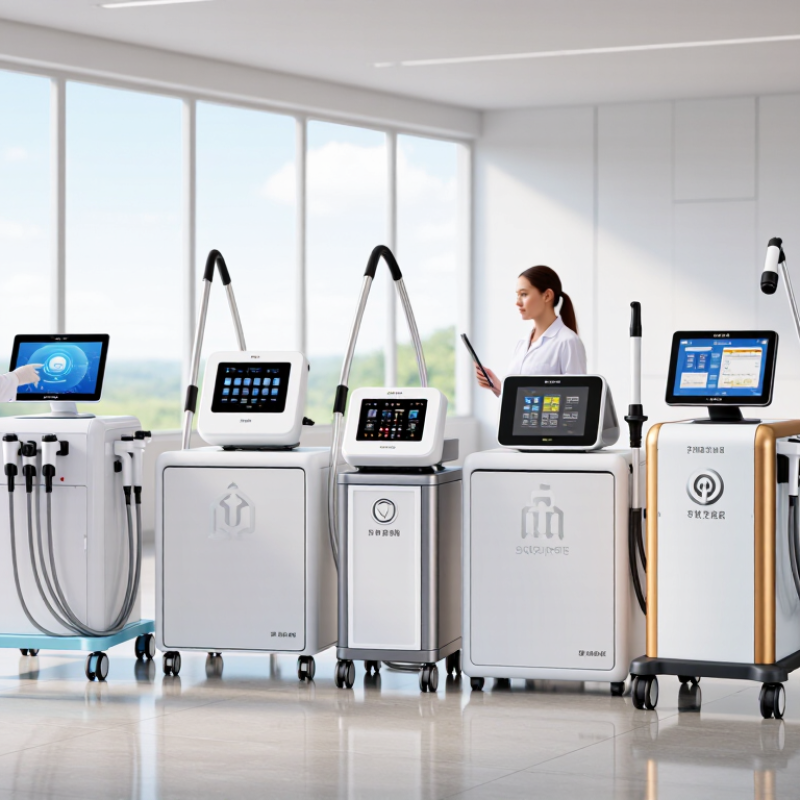
China laser skin rejuvenation machines are professional devices manufactured in China for improving texture, pigmentation, fine lines, and selected scars. They may use fractional CO2, Er:YAG, diode, Nd:YAG, or picosecond technology. These systems differ greatly in wavelength, pulse duration, cooling, and tissue depth. “Laser” should not be confused with IPL, which uses broad-spectrum light.
Market demand is substantial. The ISAPS 2023 Global Survey recorded more than three million laser skin-resurfacing procedures worldwide. Grand View Research also reported continued double-digit growth in the global aesthetic lasers market. However, sales growth does not prove clinical quality. A reliable evaluation needs published specifications, measured energy output, stable pulse delivery, handpiece durability, and documented safety testing. Look for quality-management evidence, such as ISO 13485, and electrical-safety testing under relevant IEC standards. These documents support credibility, but they do not replace clinical training or local registration. Some technical sheets are incomplete. That deserves caution.
Tips: Match the wavelength to the treatment goal. Fractional CO2 can create visible peeling and redness, while non-ablative systems usually involve less downtime. Ask for fluence ranges, spot sizes, cooling performance, service records, and clinical references. Test the interface with gloves on. A beautiful screen is not enough. Before-and-after images may be selective, so review treatment settings and follow-up periods. Skin type, medication history, and sun exposure can change risk considerably. A qualified medical professional should select parameters and manage complications.
Laser skin rejuvenation systems are commonly differentiated by wavelength and treatment depth.
Ablative CO₂ and Er:YAG lasers operate at longer wavelengths for resurfacing, while 1,064 nm Nd:YAG
and 1,540–1,550 nm fractional systems are widely used for deeper heating and collagen remodeling.
The most suitable machine depends on the treatment goal, skin type, downtime preference, and clinical settings.
How Do Safety, Certification, and Treatment Results Differ?
The best China laser skin rejuvenation machine is not chosen by price alone. Safety begins with wavelength control, cooling performance, emergency shutoff, and clear operating instructions. Look for ISO 13485 quality-management certification and electrical safety testing under IEC 60601-1. A CE mark may show European conformity, but it is not independent proof of clinical effectiveness. FDA clearance, where applicable, should match the exact device and intended use. Verify the certificate, manufacturer, model, and expiry date.
That distinction matters.
The ISAPS 2023 Global Survey recorded 19.1 million nonsurgical aesthetic procedures worldwide. Demand is growing, but treatment results still depend on more than machine specifications. Fluence, pulse duration, spot size, skin type, and operator training must work together. Published clinical evidence should identify treatment settings and follow-up periods. Ask for studies involving diverse Fitzpatrick skin types. Request before-and-after images with consistent lighting. Attractive images can mislead.
The WHO Global Patient Safety Action Plan 2021–2030 notes that about one in ten patients experiences harm in healthcare settings. Laser treatment deserves the same caution. Test cooling stability during repeated pulses. Check whether software records energy output and treatment parameters. Confirm staff training and maintenance procedures. Do not accept vague claims such as “zero risk” or “permanent results.” Documentation matters. Even certified equipment can perform poorly when calibration, patient selection, or aftercare is weak. A careful buyer should compare evidence, not certificates alone.
How Can Buyers Choose the Best Machine for Their Needs?
Choosing the best China laser skin rejuvenation machine starts with your treatment goals, not the lowest price. Decide whether you need pigmentation correction, fine-line improvement, acne-scar care, or general skin renewal. Different wavelengths, pulse modes, and energy ranges serve different purposes. A machine for facial redness may not suit deeper resurfacing work.
Ask the supplier for measurable specifications, clinical documentation, user training, and maintenance support. Check whether the device includes adjustable cooling, skin-contact sensors, emergency controls, and clear operating instructions. These details matter during busy treatment days. Request a demonstration on several skin tones, because performance may change across different pigmentation levels. In practice, buyers often focus too heavily on power. I made that mistake in an early equipment comparison. Usability and control were more important than maximum output.
Tips: Compare total ownership costs, including consumables, servicing, training, and downtime. Confirm the electrical requirements before delivery. Review warranty terms carefully. Speak with experienced operators, not only sales representatives. A short trial can reveal awkward handpieces, slow software, or uncomfortable cooling. Also, avoid promises of permanent results. Responsible providers explain possible benefits, limitations, and risks before treatment. The best machine is the one your trained team can operate consistently, safely, and honestly for your clients.
What Are the Best China Laser Skin Rejuvenation Machines? - How Can Buyers Choose the Best Machine for Their Needs?
| Machine Type |
Common Wavelength |
Treatment Profile |
Typical Skin Concerns |
Typical Downtime |
Key Buyer Advantages |
Important Considerations |
| Fractional CO₂ Laser |
10,600 nm |
Ablative fractional resurfacing; creates microscopic treatment columns in the skin. |
Moderate-to-deep wrinkles, acne scars, surgical scars, uneven texture and selected pigmentation concerns. |
Approximately 5–14 days, depending on settings, treatment area and individual healing. |
Strong resurfacing capability and broad clinical versatility. |
Requires careful patient selection, cooling or smoke evacuation, eye protection and trained operation. Higher risk of prolonged redness and post-inflammatory hyperpigmentation. |
| Fractional Er:YAG Laser |
2,940 nm |
Ablative resurfacing with very strong water absorption and relatively precise tissue removal. |
Fine lines, superficial scars, rough texture, enlarged pores and photodamage. |
Approximately 3–10 days for many fractional protocols. |
Precise superficial resurfacing and generally less thermal damage than CO₂ when properly configured. |
May provide less coagulation and tightening than CO₂. Results and comfort depend heavily on pulse settings and operator technique. |
| Non-Ablative Fractional Laser |
1,540 nm or 1,550 nm |
Heats the dermis through fractional microscopic zones without removing the skin surface. |
Mild-to-moderate wrinkles, acne scars, uneven texture, dyschromia and early photodamage. |
Usually 1–3 days of redness or swelling; multiple sessions are commonly required. |
Lower downtime and a practical option for patients who cannot take extended recovery time. |
Typically produces more gradual results than ablative treatment. Verify pulse energy, density range, cooling and treatment consistency. |
| Long-Pulsed Nd:YAG Laser |
1,064 nm |
Non-ablative dermal heating with comparatively deep penetration. |
Selected vascular lesions, redness, skin firmness support and hair reduction, depending on the handpiece and settings. |
Usually minimal; temporary redness or swelling may occur. |
Versatile wavelength with relatively low surface disruption and suitability for a broad range of skin types when correctly used. |
Not a direct substitute for ablative resurfacing. Confirm spot size, pulse duration, cooling system and intended indications. |
| Q-Switched or Picosecond Laser |
532 nm and/or 1,064 nm |
Short-pulse or ultra-short-pulse energy designed primarily for pigment fragmentation and photoacoustic effects. |
Selected benign pigmentation, lentigines, tattoo ink and some tonal irregularities. |
Approximately 1–7 days, depending on the indication and whether temporary darkening or crusting occurs. |
Useful for pigment-focused treatment and certain cosmetic brightening protocols. |
Pigment recurrence and post-inflammatory hyperpigmentation are possible. The device should include appropriate spot sizes, pulse controls and reliable calibration. |
| IPL Photorejuvenation System |
Broad-spectrum filtered light, commonly about 500–1,200 nm |
Non-laser intense pulsed light with interchangeable filters and adjustable pulse sequences. |
Sun spots, diffuse redness, selected vascular concerns, mild photodamage and some hair-reduction applications. |
Usually minimal; pigment may temporarily darken before flaking or fading. |
Broad treatment coverage and flexible filter options for multi-purpose aesthetic clinics. |
It is not a laser. Performance depends on filter quality, fluence control, pulse structure, cooling and proper skin-type assessment. |
Buyer Evaluation Checklist
| Evaluation Dimension |
What to Check |
Why It Matters |
Practical Buyer Target |
| Treatment Objective |
Determine whether the main demand is resurfacing, pigmentation, vascular treatment, texture improvement or low-downtime maintenance. |
Different wavelengths and pulse profiles target different chromophores and tissue depths. |
Select the platform based on the clinic’s actual patient mix rather than the highest power specification. |
| Energy and Pulse Control |
Review fluence range, pulse duration, pulse stacking, repetition rate, spot size and treatment density. |
Fine adjustment improves treatment flexibility, comfort and safety across different indications. |
Prefer independently adjustable parameters with clear on-screen guidance and documented output testing. |
| Cooling and Patient Comfort |
Check contact cooling, air cooling, water circulation, cooling response time and temperature monitoring. |
Effective cooling can improve comfort and reduce avoidable thermal injury. |
Request a live demonstration at representative settings instead of relying only on catalogue images. |
| Safety and Compliance |
Verify electrical safety documents, laser classification, emergency stop, key switch, protective eyewear and local regulatory requirements. |
Aesthetic laser equipment can cause eye injury, burns and pigmentation complications if improperly controlled. |
Obtain complete technical files and confirm that the model can legally be installed and operated in the target market. |
| Reliability and Serviceability |
Assess component availability, preventive-maintenance requirements, warranty terms, remote support and repair response time. |
Downtime directly affects appointment capacity and operating revenue. |
Request a written service-level agreement and a list of commonly replaced parts before purchase. |
| Training and Usability |
Review interface clarity, preset protocols, language options, user permissions and hands-on operator training. |
Consistent operation reduces avoidable parameter errors and improves workflow efficiency. |
Choose a system that records treatment parameters and includes structured clinical training. |
| Total Cost of Ownership |
Include purchase price, shipping, installation, consumables, handpiece replacement, maintenance, training and facility upgrades. |
The lowest initial price may not represent the lowest long-term operating cost. |
Compare estimated cost per treatment and expected annual utilization over at least three years. |
Technical ranges and downtime figures are typical industry ranges, not guaranteed outcomes. Actual performance depends on device calibration, treatment parameters, skin type, clinical indication, operator training and local regulations. IPL is included for comparison because it is commonly marketed alongside laser skin-rejuvenation systems, although it uses broad-spectrum pulsed light rather than laser emission.