
How to Choose the Best RF Needling Machine?
Choosing the best rf needling machine requires more than comparing prices, wattage, or glossy treatment photos. The global microneedling market continues to expand. Grand View Research estimated its 2023 value at approximately USD 672 million, with steady growth expected through 2030. Fortune Business Insights also reports increasing demand for minimally invasive aesthetic procedures. These figures show momentum, not proof of device quality.
A reliable evaluation starts with clinical control. Check needle-depth accuracy, insulated or non-insulated tips, pulse duration, energy delivery, cooling options, and handpiece stability. Ask whether the manufacturer publishes technical data, safety testing, training requirements, and service records. Look for adjustable settings that suit different skin types and treatment areas. Facial skin, acne scars, and the jawline do not require identical approaches.
Dermatologist Dr. Rebecca Fitzgerald has often stressed a useful clinical principle: “Treat the patient, not the technology.” That idea matters here. The most expensive platform may still be unsuitable for your workflow. A lower-cost machine may lack consistent energy output or dependable after-sales support. Small details matter. A loose cartridge, unclear interface, or delayed service call can affect treatment confidence. Reports and specifications help, but hands-on evaluation remains essential. This is where the process becomes imperfect. Marketing claims can sound precise while hiding important limitations. Compare published evidence, real operator feedback, regulatory documentation, and practical training before deciding. A strong rf needling machine should support controlled treatments, transparent maintenance, and responsible patient care—not merely impressive numbers.
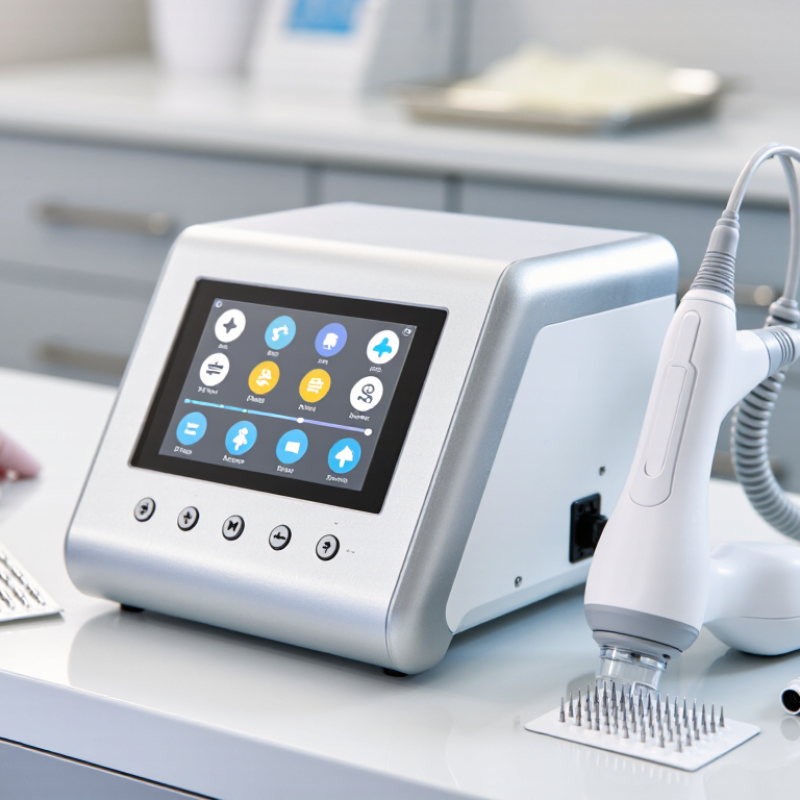
Define RF Needling Technology and Its Main Treatment Applications
How to Choose the Best RF Needling Machine?
Radiofrequency needling combines fine needles with controlled electrical energy. The needles enter the dermis, then release RF heat at selected depths. This process can stimulate collagen remodeling while protecting much of the surface skin. Needle depth, energy level, pulse duration, and cooling design directly affect treatment precision.
Common applications include acne-scar improvement, fine lines, uneven texture, and mild skin laxity. Some clinical protocols also address enlarged pores and excessive underarm sweating. A 2022 systematic review in the Aesthetic Surgery Journal found that fractional radiofrequency treatments generally improved skin texture and scarring, but study methods varied widely. The evidence is promising, not perfect. Treatment results depend on skin type, settings, aftercare, and operator skill.
Demand is growing. The International Society of Aesthetic Plastic Surgery reported 19.1 million non-surgical procedures worldwide in 2023. Its report does not separate RF needling from other technologies, so the figure should not be overstated. When comparing machines, check adjustable needle depths, stable energy delivery, insulated needle options, cartridge traceability, and clear treatment records. User training matters just as much. The FDA has warned about serious RF microneedling complications, including burns, scarring, fat loss, and nerve injury. Safer selection requires documented testing, transparent instructions, and a qualified medical professional. More power is not automatically better.
How to Choose the Best RF Needling Machine? - Define RF Needling Technology and Its Main Treatment Applications
| Evaluation Dimension | What It Means | Typical Technical or Clinical Range | Why It Matters When Choosing a Machine | Recommended Selection Focus |
|---|---|---|---|---|
| Technology Definition | Radiofrequency (RF) microneedling uses insulated or non-insulated needles to deliver controlled RF energy into selected layers of the skin. | Mechanical needle penetration plus thermal energy delivered below the skin surface. | Combines fractional skin injury with dermal heating, which can support collagen remodeling and skin tightening. | Choose a system that allows independent control of needle depth, RF output, pulse duration, and delivery mode. |
| RF Frequency | The electrical frequency used to generate tissue heating. | Common aesthetic RF systems operate in the radiofrequency range, often around 0.5–2 MHz; the exact value varies by device design. | Frequency affects the way energy is delivered, but frequency alone does not determine treatment quality or safety. | Evaluate the complete energy-delivery system, temperature control, pulse settings, and clinical documentation rather than frequency alone. |
| Needle Type | Needles may be insulated, non-insulated, or partially insulated. | Insulated needles release energy mainly near the tips; non-insulated needles can deliver energy along the exposed needle path. | Needle insulation influences the shape and location of the thermal zone and may affect downtime and treatment precision. | For precise deep dermal treatment, consider insulated or partially insulated needles with clear configuration options. |
| Adjustable Needle Depth | The penetration depth determines which skin layer receives mechanical stimulation and RF energy. | Many systems provide adjustable depths approximately from 0.5 mm to 3.5 mm, depending on the treatment area and device design. | Different areas require different depths. The face, neck, body, and acne-scar regions should not automatically use the same setting. | Prioritize fine depth adjustment, stable needle movement, and clearly displayed treatment parameters. |
| Energy Delivery Mode | RF may be delivered as continuous, pulsed, or fractional energy, depending on the system. | Fractional delivery creates separated treatment columns instead of heating the entire skin surface. | Fractional delivery can help balance treatment intensity with recovery time and may reduce unnecessary surface heating. | Select a machine with repeatable pulse control and settings suitable for both superficial and deeper treatment plans. |
| Temperature Management | Temperature monitoring or feedback helps control the thermal exposure delivered to tissue. | Many clinical protocols target controlled dermal heating; exact temperatures and exposure times must follow the device protocol and professional training. | Excessive or uneven heating can increase the risk of burns, prolonged inflammation, pigmentary changes, or scarring. | Look for real-time monitoring, automatic cut-off functions, consistent handpiece contact, and documented safety testing. |
| Skin Rejuvenation | Improvement of fine lines, mild laxity, uneven texture, and overall skin quality. | Usually treated with conservative-to-moderate settings and a series of sessions rather than a single universal setting. | RF-induced thermal remodeling may stimulate new collagen formation over time, while microneedling supports controlled remodeling. | Choose adjustable superficial and mid-dermal depths, precise energy control, and a handpiece suitable for facial contours. |
| Acne Scars and Enlarged Pores | Fractional mechanical and thermal treatment intended to improve atrophic acne scars and visible pore texture. | Depth and energy are selected according to scar type, skin thickness, location, and individual tolerance. | Controlled dermal remodeling may improve depressed scar texture, but raised scars and active acne require different clinical considerations. | Choose insulated or fractional needle options, adjustable penetration, and strong control over pulse duration and energy. |
| Skin Tightening | Controlled heating of the dermis may support collagen contraction and longer-term collagen remodeling. | Commonly used for mild to moderate laxity of the face, jawline, neck, and selected body areas. | Results depend on tissue laxity, treatment depth, energy delivery, age, and the patient's biological response. | Prioritize stable deep delivery, temperature monitoring, and treatment tips designed for larger or contoured areas. |
| Stretch Marks and Body Texture | RF microneedling can be used in selected protocols for striae and textural irregularities. | Body treatment generally requires different needle depths, tip sizes, and treatment coverage than facial treatment. | A suitable system should deliver consistent energy across larger areas while maintaining controlled penetration. | Select interchangeable tips, ergonomic handpieces, adequate treatment coverage, and robust cooling or safety controls where applicable. |
| Treatment Precision | Precision refers to consistent needle insertion, predictable energy release, and accurate parameter display. | Important controls include insertion speed, pulse duration, needle depth, energy level, and shot count. | Consistent delivery improves repeatability between treatment areas and treatment sessions. | Choose a system with clear digital controls, stable needle deployment, and a recordable treatment protocol. |
| Patient Comfort | Comfort is influenced by needle diameter, insertion speed, energy level, treatment area, and topical anesthetic use. | Most professional protocols use topical anesthetic when appropriate, with treatment intensity adjusted to patient tolerance. | Better comfort can improve patient experience and help clinicians maintain consistent treatment technique. | Consider adjustable insertion speed, controlled pulse delivery, ergonomic handpieces, and suitable disposable tips. |
| Downtime Profile | Temporary redness, swelling, pinpoint bleeding, crusting, or sensitivity may occur after treatment. | Recovery varies according to needle depth, RF energy, treatment density, skin type, and aftercare. | A device that provides flexible settings can help tailor treatment intensity to the patient's schedule and risk profile. | Choose adjustable treatment density and energy rather than a fixed-output system. |
| Safety Features | Safety functions help reduce unintended energy delivery and operating errors. | Useful features may include impedance monitoring, temperature feedback, automatic energy shut-off, handpiece detection, and insulated tips. | Safety systems are especially important when treating thin skin, darker skin types, or areas near sensitive anatomical structures. | Verify electrical safety certification, disposable-tip integrity, emergency stop functions, and documented operator training. |
| Contraindication Screening | Patient selection should consider medical history, skin condition, medications, and healing capacity. | Common precautions include active skin infection, open wounds, uncontrolled inflammatory conditions, poor wound healing, and certain implanted electronic devices. | RF microneedling is an invasive energy-based procedure and is not appropriate for every patient or every treatment area. | Use a written consultation checklist and follow local medical regulations and the device's professional instructions for use. |
| Disposable Components | Single-use needle cartridges or tips help reduce cross-contamination risk. | Disposable components should be individually sealed, sterile when specified, traceable, and discarded after one treatment. | Reusing or improperly handling needle cartridges can increase infection and sharps-related risks. | Confirm cartridge availability, sterility documentation, secure locking, and compatibility with the handpiece. |
| Operator Training | Safe treatment requires knowledge of anatomy, skin types, RF principles, needle depth, infection control, and emergency management. | Training should include supervised practice and protocol development for different indications and body areas. | Device performance cannot compensate for incorrect patient selection or inappropriate settings. | Choose a system supported by comprehensive technical training, treatment protocols, and maintenance guidance. |
| Best Overall Selection Criteria | The best RF microneedling machine is the one that matches clinical goals, operator skill, patient needs, and regulatory requirements. | Key factors include adjustable depth, controlled RF delivery, temperature monitoring, safety functions, disposable tips, and service support. | Balanced control and safety are more important than a single headline specification. | Select a flexible, clinically documented, safety-focused system that can be operated consistently by trained professionals. |
Related Posts
-
10 Tips for Choosing a Radio Frequency Microneedling Machine
-
Why You Should Consider Laser Skin Resurfacing for Youthful Skin?
-
Why Choose Alexandrite Laser Hair Removal for Smooth Skin?
-

2026 Top Light Sheer Laser Hair Removal Technology Insights?
-
Top 5 Tips for Using Splendor X Laser Hair Removal Effectively?
-

Top 5 Body Contouring Equipment for Effective Fat Reduction?