How to Choose Laser Skin Rejuvenation Equipment?

Choosing laser skin rejuvenation equipment requires more than comparing wattage, prices, or polished product images. The right system must match the treatment goal, skin types, operator training, clinical evidence, and service support. A device designed for superficial pigmentation may be unsuitable for deep wrinkles or acne scars. That distinction matters on real skin, under real clinical pressure.

Industry data shows why careful selection is necessary. The International Society of Aesthetic Plastic Surgery reported 19.1 million non-surgical aesthetic procedures worldwide in its 2023 Global Survey. Grand View Research also forecasts continued growth in the global aesthetic lasers market through 2030. These figures suggest strong demand, but market growth does not prove that every device performs equally well. Reports often group different technologies together. That can make comparisons less precise.

R. Rox Anderson, MD, a pioneer in laser medicine, stated, “If you can selectively heat a target, you can destroy it.” This principle explains why wavelength, pulse duration, fluence, and cooling systems deserve close attention. A reliable evaluation should also examine clinical studies, adjustable parameters, eye protection, maintenance records, and documented training. Ask difficult questions. How does the device perform across Fitzpatrick skin types? What happens when settings are poorly selected? What evidence supports the manufacturer’s claims?

The best choice is rarely the most powerful machine. It is the system that delivers predictable results, supports safe protocols, and fits the clinic’s actual experience. Mistakes remain possible. A thoughtful purchasing process should admit that reality.
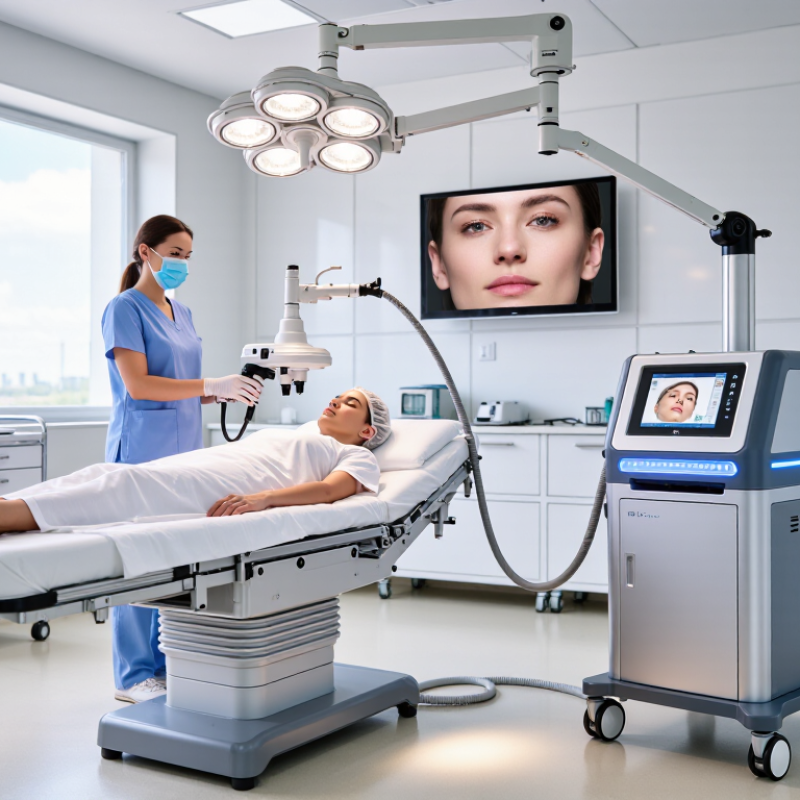
How to Choose Laser Skin Rejuvenation Equipment?

Define Your Skin Rejuvenation Goals and Treatment Requirements

Choosing laser skin rejuvenation equipment should begin with a treatment goal, not a device catalog. Clarify whether you want to soften fine lines, reduce uneven pigmentation, improve texture, or support scar care. Each concern may require a different wavelength, pulse structure, and energy range. Define acceptable downtime too. Some patients prefer mild redness for one day, while others accept several days of peeling for stronger results. Skin tone, sensitivity, medication history, and previous procedures also influence the plan. An experienced practitioner should inspect the skin in natural light and document baseline photographs. Guesswork is not a treatment strategy.

Your requirements should include more than visible results. Ask about cooling systems, adjustable settings, spot sizes, treatment speed, maintenance, and operator training. Reliable equipment should have clear technical documentation and safety instructions for its intended use. Clinics should explain contraindications, protective eyewear, test spots, and aftercare. In practice, plans can fail when providers chase maximum intensity instead of the patient’s actual goal. Biology varies, and improvement may be gradual or incomplete. This deserves honest discussion.

Tips: Write down your main concern and maximum recovery time before visiting a clinic. Request realistic photographs, not only dramatic examples. Ask who will operate the equipment and how complications are managed. Do not choose solely by power or price. A lower setting may be wiser for sensitive skin, while aggressive treatment can create avoidable inflammation. That balance deserves careful review.

Compare Laser Technologies, Wavelengths, and Treatment Applications

How to Choose Laser Skin Rejuvenation Equipment?

Choosing laser equipment requires more than comparing power ratings. The wavelength determines how deeply energy travels and which tissue absorbs it. Ablative CO2 lasers at 10,600 nm remove controlled layers of skin, supporting resurfacing and deeper wrinkles. Er:YAG systems at 2,940 nm act more superficially and may offer faster recovery. Non-ablative wavelengths, such as 1,320 nm or 1,540 nm, heat the dermis without removing the surface. They can improve fine lines, texture, and mild laxity gradually.

Applications must match patient needs. Shorter wavelengths often target superficial pigment, while longer wavelengths can reach deeper vessels or follicles. However, wavelength alone does not guarantee safe results. Pulse duration, cooling, spot size, and fluence also matter. Darker skin types may face higher risks of post-inflammatory pigmentation, especially with aggressive settings. IPL is not a laser, but it may address diffuse redness and pigmentation when appropriately selected. The distinction is important.

Tips: Review the intended treatment area, skin type, downtime, and operator training. Ask for documented clinical evidence, maintenance support, and safety testing. A qualified professional should perform a skin assessment and explain realistic outcomes. Patch testing may be sensible for higher-risk patients. Do not choose equipment only because it looks powerful. A perfect match does not exist. Even experienced practitioners sometimes need to adjust settings after observing healing, which is why careful follow-up remains essential.

How to Choose Laser Skin Rejuvenation Equipment?

Representative laser wavelengths and their common skin treatment applications

755 nm Alexandrite: Commonly used for selected pigmentation and hair-reduction applications.
1064 nm Nd:YAG: Used for deeper-targeted vascular or pigment treatments and some tightening protocols.
1550 nm Erbium Glass: Non-ablative fractional resurfacing for fine lines, texture, and acne-scar improvement.
1927 nm Thulium: Fractional treatment commonly selected for superficial photodamage and uneven pigmentation.
2940 nm Er:YAG: Ablative resurfacing with strong water absorption for controlled superficial skin resurfacing.
10600 nm CO₂: Ablative resurfacing for pronounced wrinkles, scars, and texture irregularities.

Wavelength is only one selection factor. Pulse duration, fluence, spot size, fractional density, cooling, skin type, downtime, and operator experience also affect treatment outcomes and safety.

Evaluate Device Safety, Performance, and User-Friendly Features

Choosing laser skin rejuvenation equipment requires more than comparing energy levels or treatment speed. Safety should be assessed through documented testing, protective eyewear, emergency controls, and reliable temperature monitoring. Ask whether the system supports different skin tones and treatment areas. A device that works well on one complexion may require careful adjustment on another. That detail matters.

Performance should be measured through consistent results, not impressive demonstrations. Request clinical evidence, maintenance records, and realistic treatment timelines. Check pulse settings, cooling performance, spot size options, and recovery expectations. Experienced practitioners should understand how these features affect comfort and outcomes. Training is essential. Even advanced equipment can become unsafe when users rely on guesswork.

User-friendly design also influences clinical quality. Clear controls, readable displays, guided settings, and simple cleaning procedures reduce avoidable mistakes. Foot pedals and handpieces should feel balanced during longer sessions. Test the interface personally, if possible. A polished screen does not guarantee dependable performance. No device is perfect. Some systems may offer excellent precision but require frequent maintenance or extensive training. Others feel simple but provide limited adjustment options. Reflect on the staff’s actual skill level, workload, and patient needs before purchasing. Ask difficult questions, and record the answers.

Check Manufacturer Credentials, Certifications, and After-Sales Support

When choosing laser skin rejuvenation equipment, start with the manufacturer’s credentials. A polished website is not enough. Check its operating history, engineering team, production facilities, and quality management records. Ask for current certifications, product registration documents, and electrical safety reports relevant to your market. Certification alone does not guarantee performance, but missing documentation is a serious warning sign.

Request a live demonstration, not only edited videos. Observe the handpiece, cooling system, control screen, and emergency stop function. Ask how operators are trained and whether training materials reflect real treatment conditions. Reliable manufacturers should explain contraindications, maintenance intervals, calibration procedures, and expected consumable costs. Speak with several existing users if possible. Their experience may reveal delays that sales brochures hide.

After-sales support deserves equal attention. Confirm the warranty period, repair process, spare-parts availability, and average response time in writing. Ask whether remote diagnostics and on-site service are available. A machine can look affordable until one faulty handpiece stops your treatment room for weeks. That risk is often underestimated. Also check whether software updates, safety notices, and technical training continue after purchase. Some suppliers promise extensive support, yet provide only a generic email address. That is not enough. Leave room for doubt, compare every claim with evidence, and choose a supplier whose support process is clear before payment.

Estimate Costs, Maintenance Needs, and Long-Term Value

Choosing laser skin rejuvenation equipment requires more than comparing purchase prices. I assess treatment goals, skin types, pulse controls, cooling systems, and operator training. A device that looks affordable may become expensive when its handpieces, filters, or cooling components need frequent replacement. Ask for written service terms, calibration schedules, response times, and training records. These details often reveal more than a polished demonstration.

Calculate the full cost over three to five years. Include installation, room preparation, electricity, consumables, maintenance contracts, insurance, and possible downtime. A single service delay can cancel several appointments and reduce patient confidence. I also compare the estimated cost per treatment with realistic monthly usage, not optimistic sales projections. Low utilization weakens long-term value. It is easy to overlook this.

Clinical versatility can improve returns, but excessive versatility may create complexity. Look for clear settings, reliable safety features, and treatment protocols supported by credible clinical evidence. Ask whether local technicians can service the equipment and whether replacement parts remain available. I would request a supervised demonstration using realistic treatment scenarios, rather than judging results from edited photographs. Results vary with skin condition, operator skill, and aftercare. No machine removes that uncertainty.

My own evaluation would include a written risk-and-cost review after several weeks of testing. Some assumptions may prove wrong. That is useful. Speak with experienced practitioners about maintenance frequency, patient comfort, and unexpected repair expenses. A durable system with predictable service may deliver greater value than a cheaper unit with impressive specifications.

How to Choose Laser Skin Rejuvenation Equipment? - Estimate Costs, Maintenance Needs, and Long-Term Value

The figures below are practical planning estimates in U.S. dollars for professional-use systems. Actual costs vary by configuration, treatment area, local regulations, shipping, installation, warranty coverage, and service contracts.

Technology Typical Wavelength or Light Range Primary Rejuvenation Uses Estimated Equipment Cost Typical Treatment Price Consumable Cost per Treatment Routine Maintenance Needs Estimated Annual Maintenance Budget Typical Service Life Downtime and Recovery Considerations Estimated Break-Even Treatments Long-Term Value Assessment
Intense Pulsed Light (IPL) Approximately 500–1,200 nm, depending on filter configuration Sun spots, uneven pigmentation, facial redness, diffuse photodamage, and mild vascular concerns $15,000–$60,000 $150–$450 $5–$30 Handpiece and filter inspection, cooling-system checks, optical-window cleaning, calibration, and replacement of the flashlamp when required Approximately 5%–10% of purchase price 5–8 years with scheduled servicing Usually minimal downtime; temporary redness or darkening of pigmented spots may occur Approximately 50–350 treatments, depending on utilization and pricing Strong value for clinics needing a versatile, high-throughput platform for pigmentation and redness
Non-Ablative Fractional Laser Commonly around 1,540–1,565 nm Fine lines, acne scars, enlarged pores, uneven texture, and mild-to-moderate photodamage $35,000–$100,000 $400–$1,200 $10–$80 Cooling-system inspection, optical-path cleaning, handpiece checks, software updates, and periodic calibration Approximately 6%–12% of purchase price 5–8 years with proper maintenance Typically 1–3 days of redness or swelling; multiple sessions are commonly needed Approximately 35–250 treatments, depending on capital cost and treatment fee Good long-term value where patients seek texture improvement with limited downtime
Fractional Ablative CO2 Laser Approximately 10,600 nm More pronounced wrinkles, acne scars, textural irregularities, and significant photodamage $40,000–$120,000 $800–$2,500 $20–$150 Articulated-arm and scanner inspection, lens cleaning, calibration, smoke evacuation checks, and replacement of worn accessories Approximately 7%–15% of purchase price 5–8 years with qualified servicing Usually 4–14 days of visible recovery, depending on treatment intensity and patient factors Approximately 25–150 treatments, excluding staffing and facility costs High revenue potential per treatment, but requires stronger clinical protocols, training, and patient screening
Long-Pulsed Nd:YAG Laser 1,064 nm Selected vascular concerns, deeper tissue heating, skin tightening protocols, and some hair-reduction applications $30,000–$90,000 $250–$900 $5–$50 Cooling-system checks, handpiece inspection, optical-window cleaning, calibration, and replacement of cooling or contact components Approximately 5%–10% of purchase price 6–10 years with regular maintenance Usually little to moderate downtime; temporary swelling, redness, or sensitivity may occur Approximately 40–300 treatments, depending on utilization and treatment mix Best value when the clinic can use the platform across several compatible indications
Q-Switched or Picosecond Pigment Laser Commonly 532 nm and/or 1,064 nm; picosecond systems use ultra-short pulses Selected benign pigmented lesions, lentigines, and tattoo-related services; suitability depends on diagnosis and local rules $45,000–$150,000 $250–$1,500 $5–$50 Resonator and handpiece inspection, beam alignment, calibration, cooling checks, and replacement of protective optics when needed Approximately 8%–15% of purchase price 5–8 years with specialized service Often limited downtime, but temporary darkening, crusting, or color changes may occur Approximately 35–400 treatments, depending on configuration and service demand Can be profitable in a high-demand pigment practice, but utilization risk is higher if the service mix is narrow
Er:YAG Fractional Ablative Laser Approximately 2,940 nm Superficial resurfacing, fine lines, uneven texture, and selected scar-treatment protocols $40,000–$110,000 $600–$1,800 $15–$100 Scanner and handpiece checks, optical-path cleaning, calibration, cooling inspection, and smoke evacuation maintenance Approximately 7%–14% of purchase price 5–8 years with scheduled servicing Recovery is often shorter than deeper CO2 resurfacing but varies with energy and density settings Approximately 30–180 treatments, depending on purchase price and local fees Attractive for practices focused on controlled resurfacing and moderate recovery times
Break-even estimates are calculated from equipment cost divided by estimated gross revenue per treatment before rent, labor, financing, marketing, taxes, insurance, and other operating expenses. Laser procedures should be performed only by appropriately trained and legally authorized professionals.
Lumenis logo